Signs Your Foundation Is Failing
A failing foundation is one that no longer supports the house evenly, and it announces itself through stair-step cracks, sticking doors, sloping floors, and gaps that keep reopening.
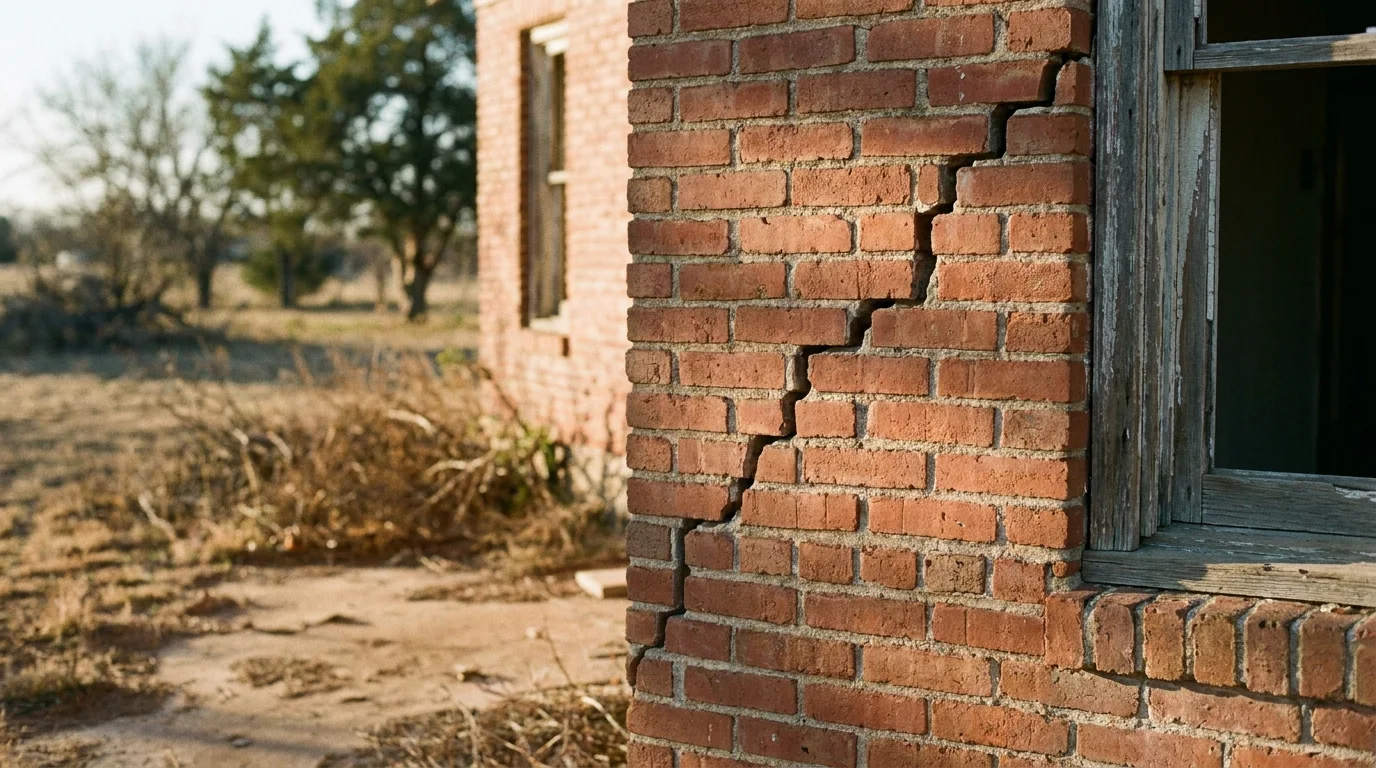
A failing foundation is one that no longer supports the house evenly: part of the slab or pier system has settled, heaved, or shifted, and the structure above it is bending to follow. The single clearest tell is a stair-step crack working diagonally through exterior brick, because mortar joints only crack in that staircase pattern when the ground under one section of the wall has dropped relative to the rest. Most homes show smaller clues long before that point, and around New Braunfels those clues follow the weather. The clay soils along the Balcones Fault swell during wet months and shrink hard through summer drought, so a foundation here rarely fails all at once. It fails gradually, one sticking door and one hairline crack at a time. This guide walks through the major warning signs, explains which ones are cosmetic and which point to structural movement, and covers when it is time to have the house measured.
Key takeaways
- Stair-step cracks in brick or drywall, especially above doors and windows, are the clearest sign a foundation is moving.
- Sticking doors and windows, sloping floors, and gaps at walls or cabinets tend to appear together as one corner settles.
- Central Texas wet-dry cycles make small cracks worse every season, so early signs are worth checking quickly.
- Catching movement early usually means fewer piers and a smaller repair bill.
Stair-Step Cracks in Brick and Drywall
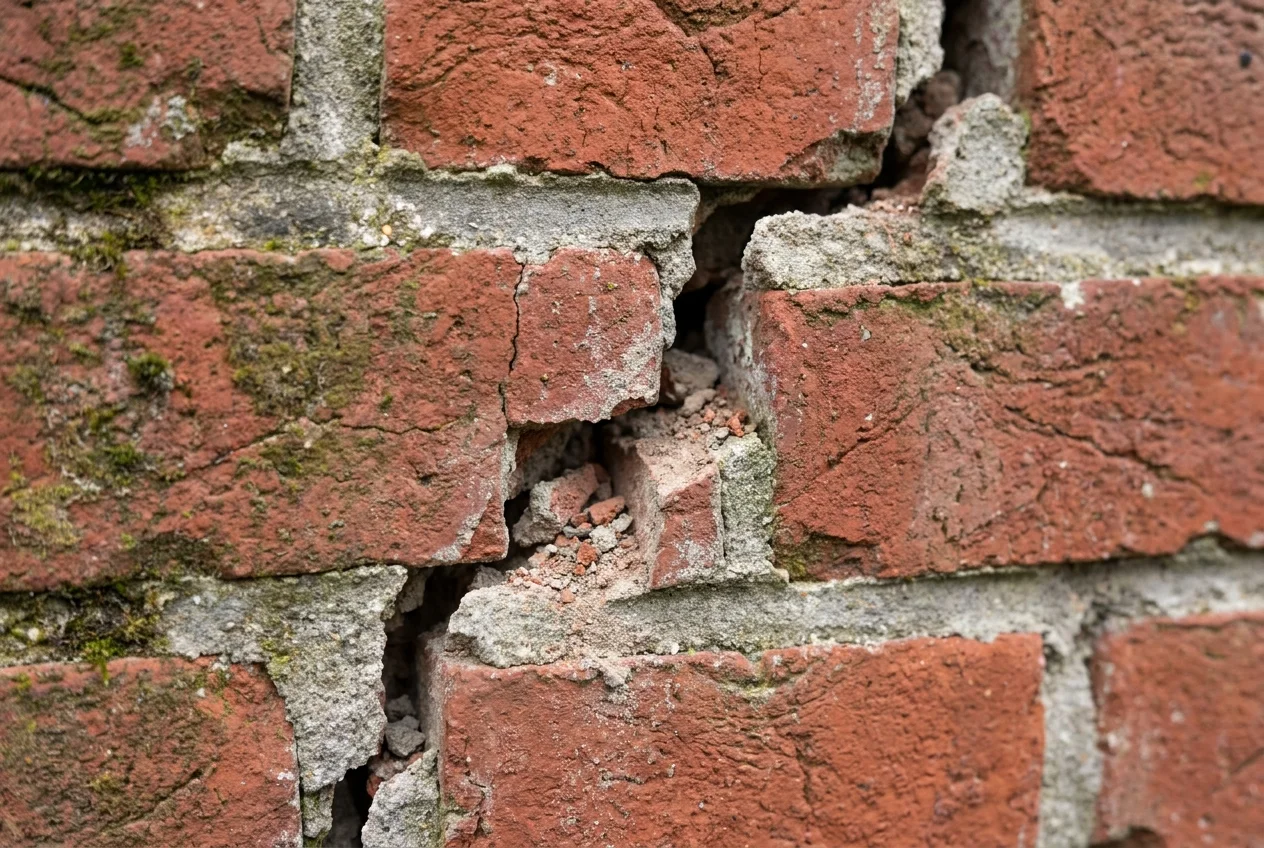
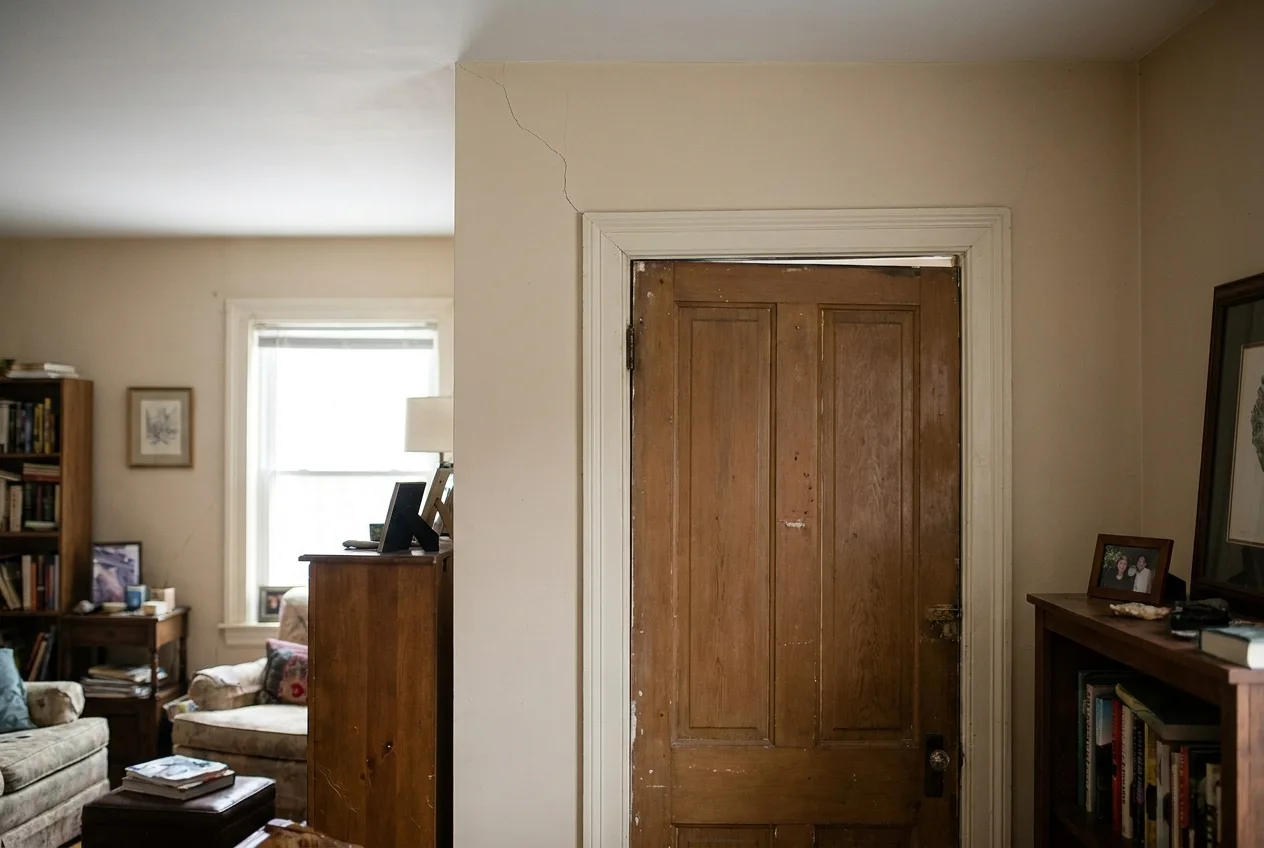
Start with the sign that gets an inspector's full attention. A stair-step crack follows the mortar joints of a brick or block wall, climbing diagonally like a staircase. Mortar is the weakest plane in masonry, so when one corner of a foundation settles, the wall relieves the stress along those joints. Inside the house, the same movement shows up as diagonal drywall cracks radiating from the corners of door frames and window openings, usually at roughly 45 degrees.
Not every crack is a crisis. A short hairline that appears after a dry spell and never grows may be seasonal. A crack that widens over months, spreads past a quarter inch, or is wider at one end than the other is tracking active movement. The order of operations matters here: patching a moving crack only buys a few months before it reopens. Stopping the movement first, then restoring the surface, is what professional foundation crack repair is for.
Sticking Doors and Windows
A door that suddenly drags on its jamb, or a window that needs real force to open, is often the first symptom a homeowner notices. Door and window frames are rectangles, and they only stay square while the wall around them stays plumb. When a foundation drops on one side, the frame racks into a slight parallelogram and the door binds against it.
Humidity swells wood too, so one sticky door in a damp June is not a verdict. The pattern is what matters: several doors and windows sticking on the same side of the house, latches that no longer meet their strike plates, or doors that drift open or closed on their own because the floor beneath them has tilted. Note which openings misbehave and when. If the trouble clusters at one end of the home and persists through dry weather, the frames are telling you which direction the foundation is moving.
Sloping, Sagging, or Bouncy Floors
Floors are the most honest surface in the house because they sit directly on the structure that is moving. A slab home develops long, gradual slopes toward the settled corner; a dropped marble or a child's toy car will find the low spot before your eye does. Pier and beam homes fail differently. Their floors turn soft or bouncy underfoot, or sag toward the middle of a room, when beams and interior supports lose bearing. In the older neighborhoods near downtown and Gruene, that springy feeling is often the first complaint.
A slope of roughly an inch across twenty feet is worth measuring properly. Correcting a tilted slab or a sagging pier and beam structure is the job of house leveling, which raises the low side back toward its original elevation instead of hiding the tilt under new flooring.
Gaps at Walls, Ceilings, Cabinets, and a Leaning Chimney
When a foundation moves, the house pulls apart at its seams. Look for gaps opening between crown molding and the ceiling, between baseboards and the floor, and between countertops or cabinets and the wall they were fastened to. Caulk lines that keep reopening after being filled are a slow-motion recording of movement. Kitchen cabinets tilting away from the wall are following the same shift.
The heavyweight version of this sign is a leaning or separating chimney. A masonry chimney often sits on its own footing, and because it is tall and heavy it exaggerates any rotation at its base. A gap widening between the chimney and the siding means the chimney and the house are settling at different rates. A leaning chimney is never cosmetic. An unsupported column of masonry is a hazard in its own right, so it deserves prompt attention.
Slab Cracks and Exterior Clues
Concrete cracks as it cures, so hairline shrinkage cracks in a garage floor or patio appear in almost every pour and usually mean nothing. What separates a warning from background noise is displacement. Watch for cracks where one side sits higher than the other, cracks wider than a quarter inch, cracks that telegraph up through floor tile, and long cracks that line up with drywall damage on the wall above.
Then walk the outside of the house. Cracked or displaced bricks, gaps around window and door frames, trim boards pulling away from the wall, and a visible dip or hump along the top of the foundation line all point to movement below. Soil that has shrunk back from the edge of the slab during a drought is a warning of its own: that gap marks where the clay has dried, and the next heavy rain will swell it back unevenly.
Cosmetic or Structural: How to Tell the Difference
Some of these signs are surface deep. Hairline vertical drywall cracks, fine shrinkage cracks in the slab, nail pops after a new home's first year, and a single door that swells in humid weather generally fall on the cosmetic side. Diagonal and stair-step cracks, cracks that keep growing or reopening, multiple sticking openings along one side of the house, measurable floor slope, separations at ceilings and cabinets, and any chimney lean fall on the structural side.
Progression matters more than size. A quarter-inch crack that has not changed in five years is less urgent than an eighth-inch crack that doubled since spring. The cheapest diagnostic tool is a pencil and a calendar: mark the ends of each crack, photograph it with the date, and check again in three months. Anything that grows is active, and active movement is the real definition of a failing foundation.
Why Central Texas Makes It Worse, and When to Act
The wet-dry cycle is what turns small movement into failure here. Expansive clay absorbs water and swells, then dries and shrinks, and every cycle flexes the foundation the way repeated bending flexes a paperclip. One flood-year spring followed by a scorching August can move a New Braunfels slab more than a decade of mild weather elsewhere.
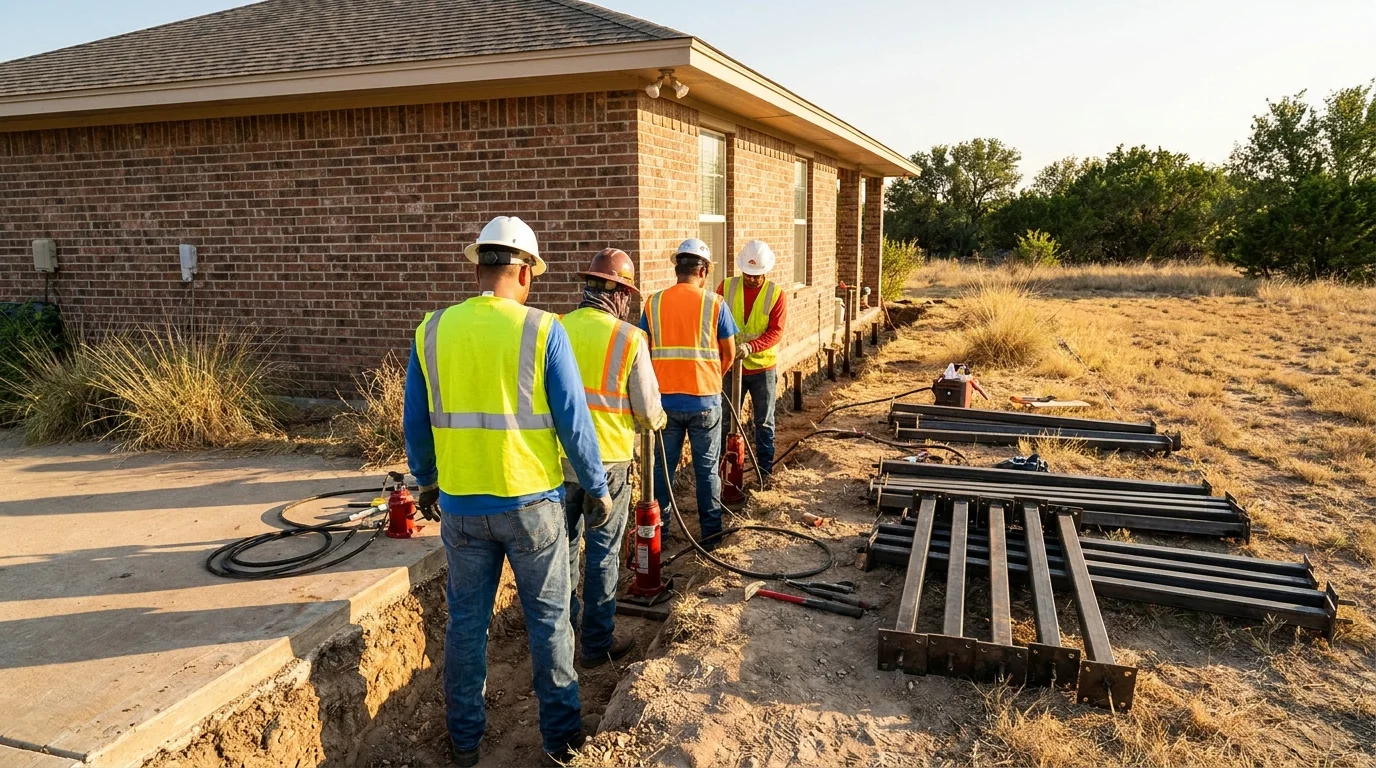
Act when signs appear in combination, when anything is visibly changing, or when a chimney leans. The sensible first step is measurement, not piers: a full foundation inspection with elevation readings tells you whether the house needs repair, monitoring, or just better drainage. If repair is on the table, what foundation repair costs in New Braunfels is driven mostly by pier count, and pier count is driven by how far the movement has spread. Settlement caught at two or three piers is a far smaller job than movement that has worked its way along a whole wall line. If your house is showing any of the signs above, see what we repair across New Braunfels or call New Braunfels Foundation Repair HQ at (325) 880-1512 and describe what you are seeing. Catching it early almost always means fewer piers.